
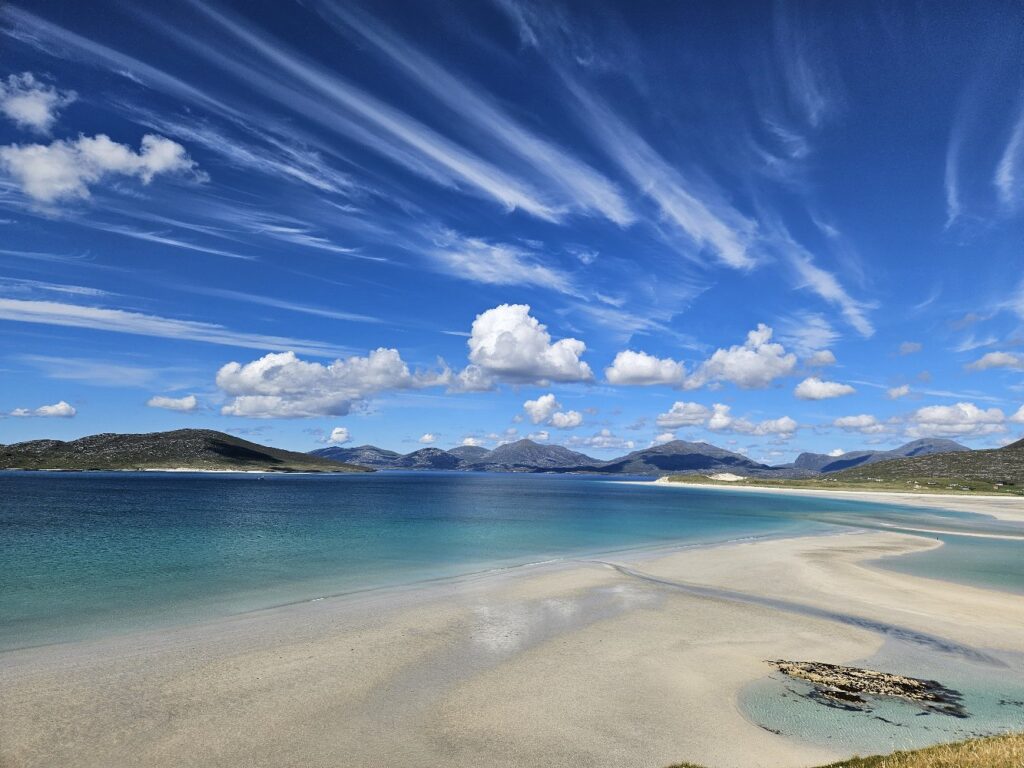
Our unique islands
The Western Isles of Scotland (Na h-Eileanan an Iar in Gaelic), also known as the Outer Hebrides, form an archipelago off the northwest coast of the Scottish mainland. It stretches 130 miles (209 km) from the Butt of the Lewis in the north to Barra Head in the south and comprises over 100 islands, of which 19 are inhabited.
The bedrock across most of the Outer Hebrides comprises metamorphic Lewisian gneisses – among the oldest rocks in Europe. The dramatic landscapes we see today on the islands were formed by the effects of the last major glaciation by erosion from weather and the sea.
The Outer Hebrides are known for their stunning scenery, with rocky hills, silver-sand beaches, crenelated coastlines and one of the world’s blanket bogs. The islands have fascinating archaeological sites, a wealth of wildlife , and a unique language and culture shaped by Gaelic and Norse influences.
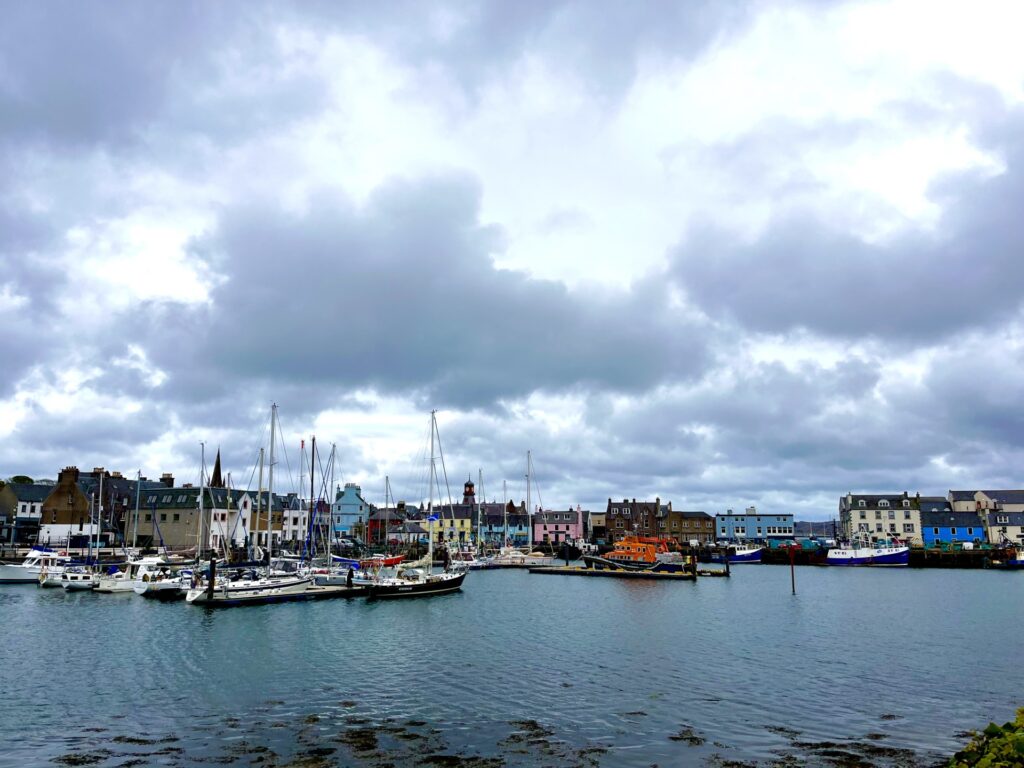
Lewis and Harris – one landmass, though they are always spoken of as separate islands – is the largest island in the Outer Hebrides and the largest offshore island in the UK. The Outer Hebrides’ capital and only town of Stornoway is situated in a sheltered harbour on the east coast of Lewis and has a population of about 7,000.
The overall population of the Outer Hebrides is about 26,000, of which 18,000 live in Lewis where there are over 200 crofting townships. Crofting is a system of land tenure and small-scale agriculture unique to the Highlands of Scotland.
Na h-Eileanan an Iar is its own parliamentary constituency for the Scottish and UK parliaments and is the smallest UK parliamentary constituency by population. Since 1975, local government on the islands has been run by a unitary authority called Comhairle nan Eilean Siar (Western Isles Council).
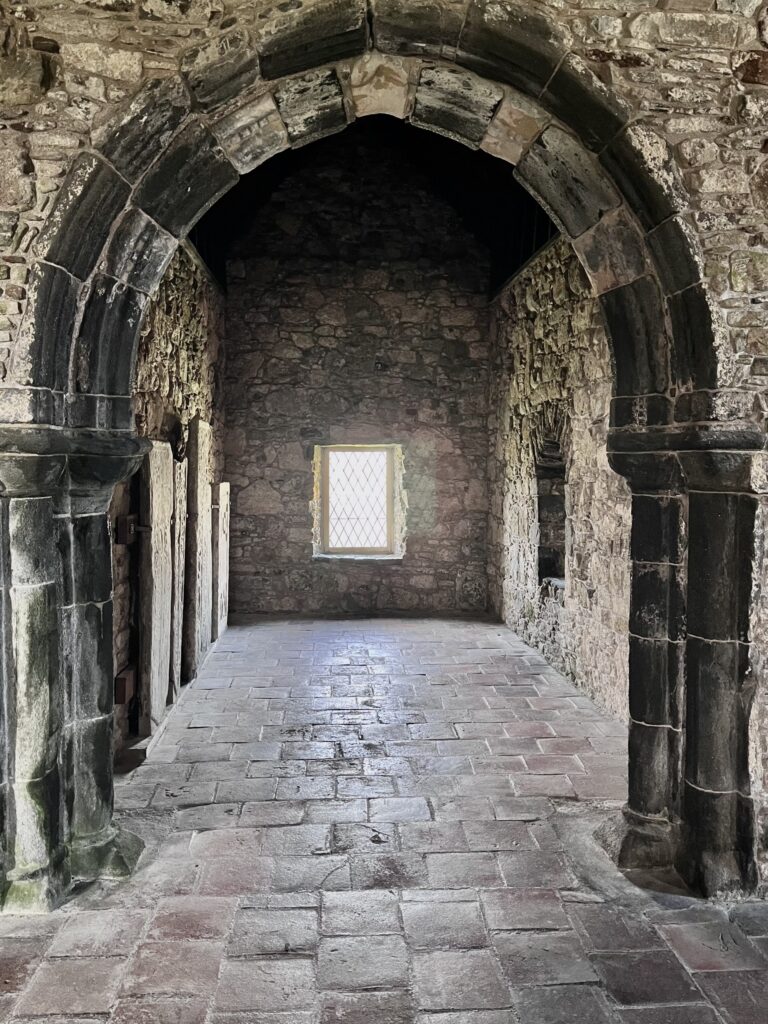
The islands have strong spiritual and religious traditions, and many businesses shut on Sundays in Lewis, Harris and North Uist where Sabbatarianism remains strong. This is not the case in the southern isles of South Uist and Barra, which are predominantly Catholic.
The Outer Hebrides have a distinct history. In the early mediaeval period, they belonged to the Kingdom of Norway and subsequently they were part of the Lordship of the Isles. Later history was marked by the land struggle. Today, much of the Outer Hebrides is held by communities, with three in four people on living on community-owned land. This represents a 360-degree change from 100 years ago when the land belonged to private landowners.
The renewable energy revolution looks set to define the next phase in the islands’ history. A new undersea cable to the mainland, due to be completed in 2030, will facilitate the creation of a series of large onshore and offshore wind farms.
Further information is available from Visit Outer Hebrides.