
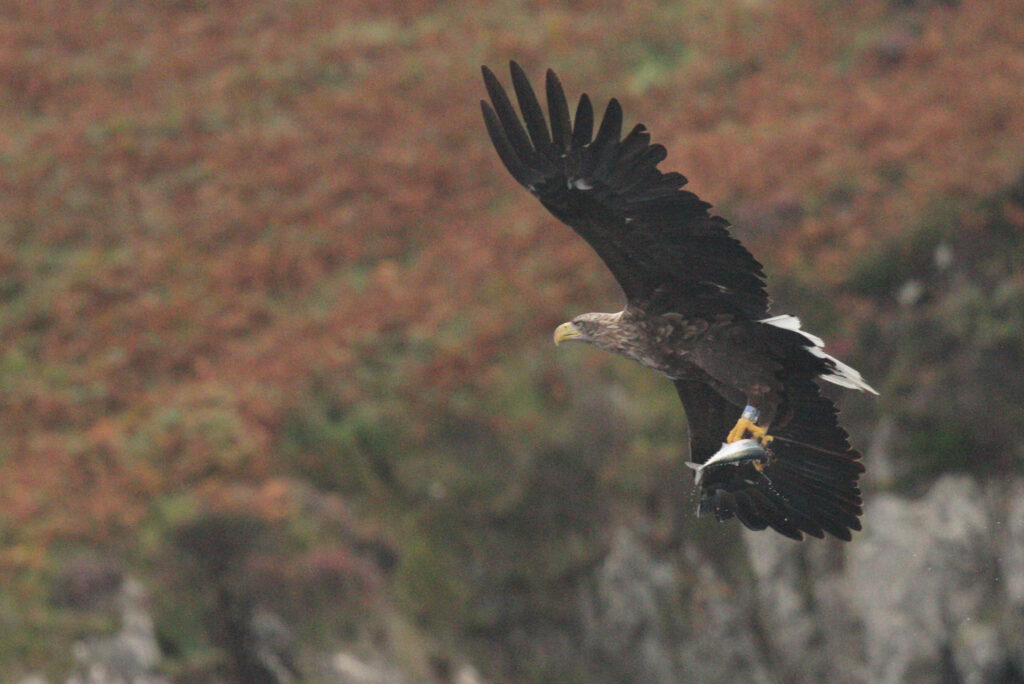
A landscape teeming with wildlife
Wildlife watching in the Outer Hebrides is among the finest in the world. Here, visitors step into a landscape that feels almost untouched by time—where golden eagles circle above a rugged backdrop, soaring on the thermals, red deer roam freely across peatland moors, and the surrounding seas teem with life.
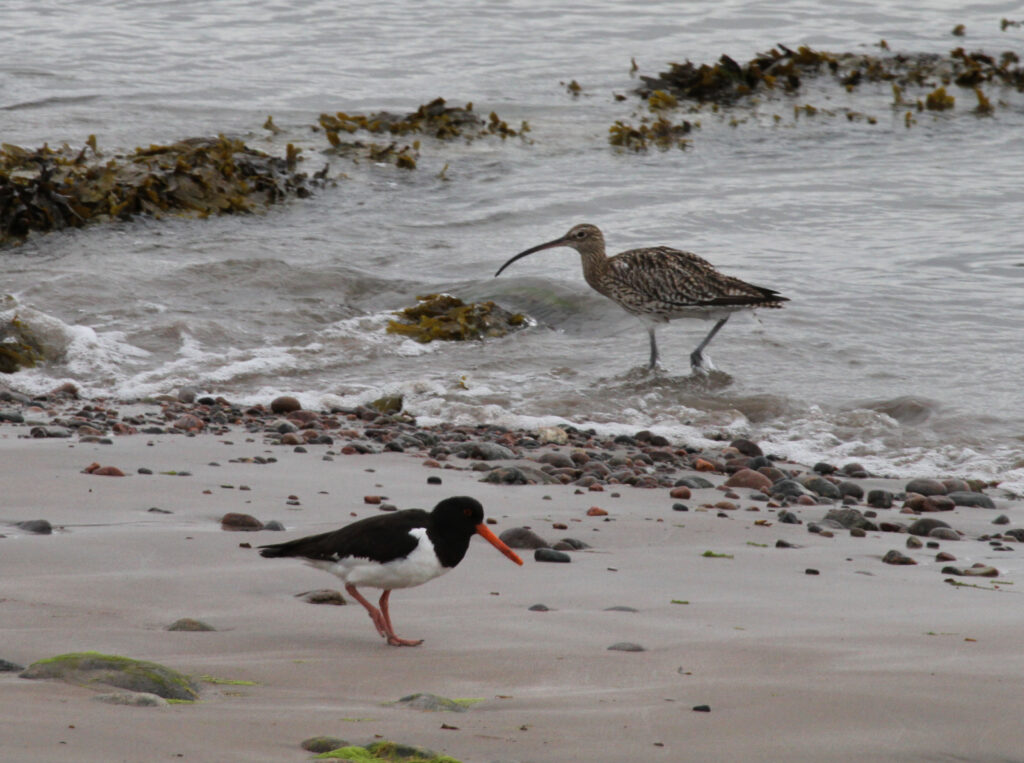
On land, encounters with wildlife are never far away. Red deer move across the hills, while otters—one of the islands’ most charismatic residents—can often be spotted swimming through sheltered sea lochs or weaving across kelp-strewn shores. Along the coastline, wading birds patrol the tidal flats and sandy bays, adding to the sense of a living, breathing landscape shaped by wind, sea and wildlife.
Offshore, the diversity is remarkable. From the diminutive harbour porpoise to the immense fin whale, more than 18 species of cetacean (whales, dolphins and porpoises) have been recorded in these waters. The region is particularly important for Risso’s, white-beaked and common dolphins, which return here to feed and raise their calves.
Minke whales are regularly seen, and humpback whales are becoming increasingly frequent visitors as populations slowly recover from the impacts of historic whaling. Some species are seasonal travellers, passing through with the changing ocean conditions, while others—such as harbour porpoises—live here year-round. Grey and harbour seals are also common, often seen hauled out on rocky outcrops or surfacing close to shore.
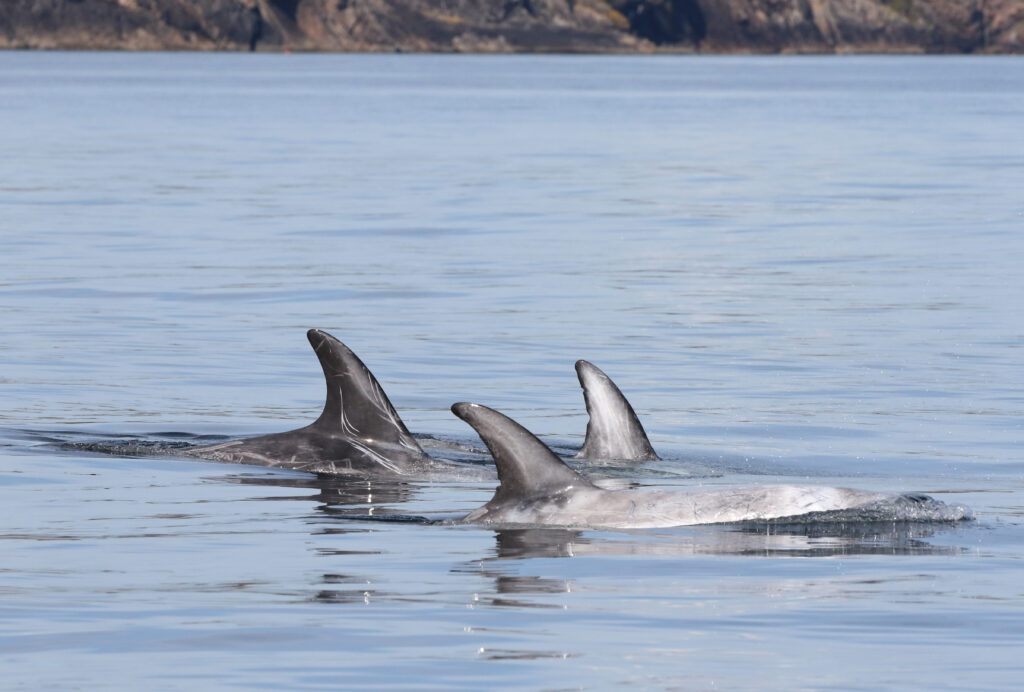
These rich waters are recognised for their importance. The North-East Lewis Marine Protected Area, designated to protect features including Risso’s dolphins and sand eels, covers almost the entire east coast of Lewis. At its heart lies Tiumpan Head on the Point peninsula—one of the best land-based whale-watching locations in the UK, where sightings of four or even five marine mammal species in a single day are not uncommon.
Above and around these waters, seabirds add another layer of spectacle. Gannets plunge into the sea like arrows in pursuit of fish, while Arctic skuas return each summer from wintering grounds off Africa. Tiny yet remarkable storm petrels arrive after journeys that stretch all the way to Antarctica. Along the cliffs and offshore islands, puffins, fulmars and kittiwakes gather in their thousands. Overhead, the commanding presence of the white-tailed eagle—the UK’s largest bird of prey—reminds visitors that this is one of the last places in Britain where wildlife still dominates the landscape.