
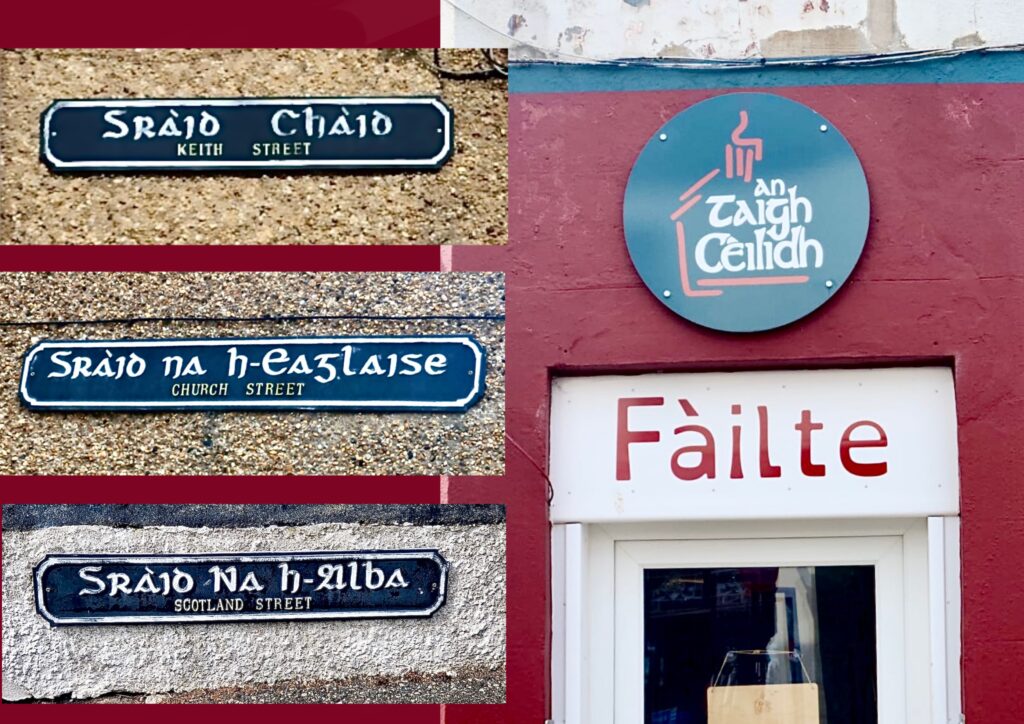
Our Gaelic heritage
Ceud mile fàilte. This Gaelic greeting means a hundred thousand welcomes.
The Gaelic language occupies a special place in the history and culture of the Outer Hebrides. Within living memory, Gaelic, not English, was the principal language of these islands. Today, Scottish Gaelic is still the first language of many islanders, though its use as a language of everyday life in communities is in decline.
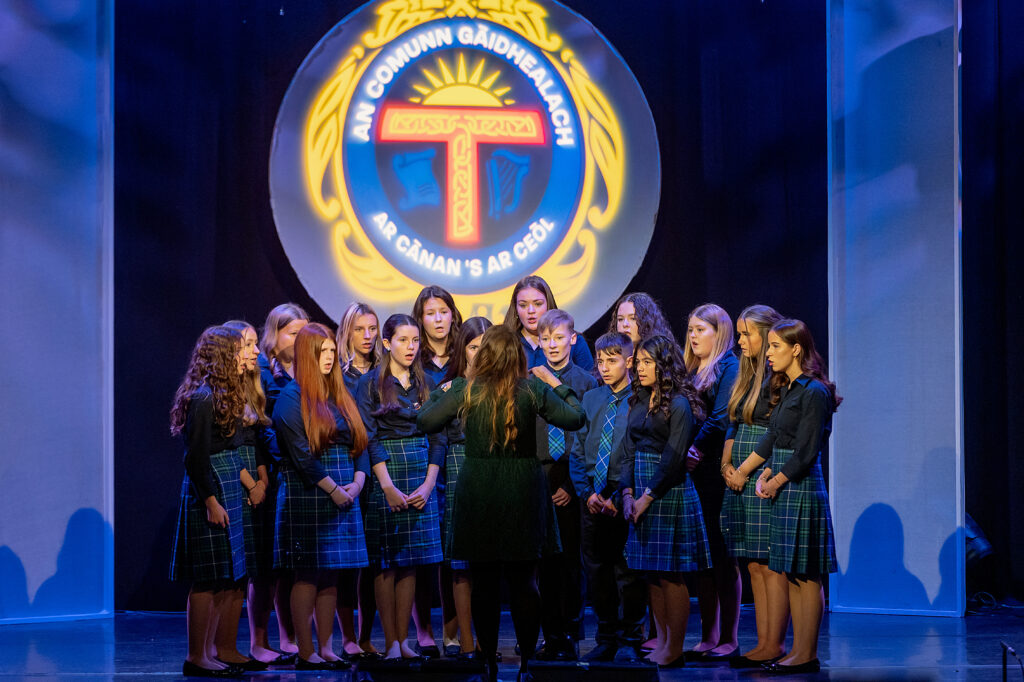
Scottish Gaelic has rich oral and singing traditions, including a unique form of unaccompanied psalm singing led by a precentor that can be heard in Protestant churches in the Outer Hebrides. The annual National Mòd, a gathering founded in 1891 by An Comunn Gàidhealach, celebrates Gaelic oral traditions and is an important part of the Gaelic calendar. It takes place in October in a different venue in Scotland each year, and schoolchildren in the Outer Hebrides have the week off so they may attend.
Gaelic Roots
Gaelic has ancient linguistic roots. Unlike Scots, it is grammatically and phonetically distinct from English. Spoken by a people called the Gaels, Scottish Gaelic is a Celtic language thought to have originated in the fifth century when it spread from Ireland.
Celtic languages were once spoken throughout Europe but are now confined to the continent’s northwestern fringes and are minority languages wherever they are found. Scottish Gaelic is one of six remaining Celtic languages. The others are Irish, Manx, Welsh, Cornish and Breton. Scottish Gaelic is most closely related to Irish and Manx.
The decline of Scottish Gaelic, which was once spoken across great swathes of Scotland, is far from accidental. For centuries, the Scottish and British governments sought to suppress the Gaelic language and the Highland way of life. Based on the clan system and Brehon law, Highland social organisation clashed with lowland norms.
Gaelic Today
Gaelic was outlawed by the Scottish crown in 1616 and further suppressed along with other aspects of Highland culture after the 1745 Jacobite rebellion, when many Highlanders supported Charles Edward Stuart, the Young Pretender. In living memory, island children were punished for speaking Gaelic in school, and many were not taught how to read and write their native tongue.
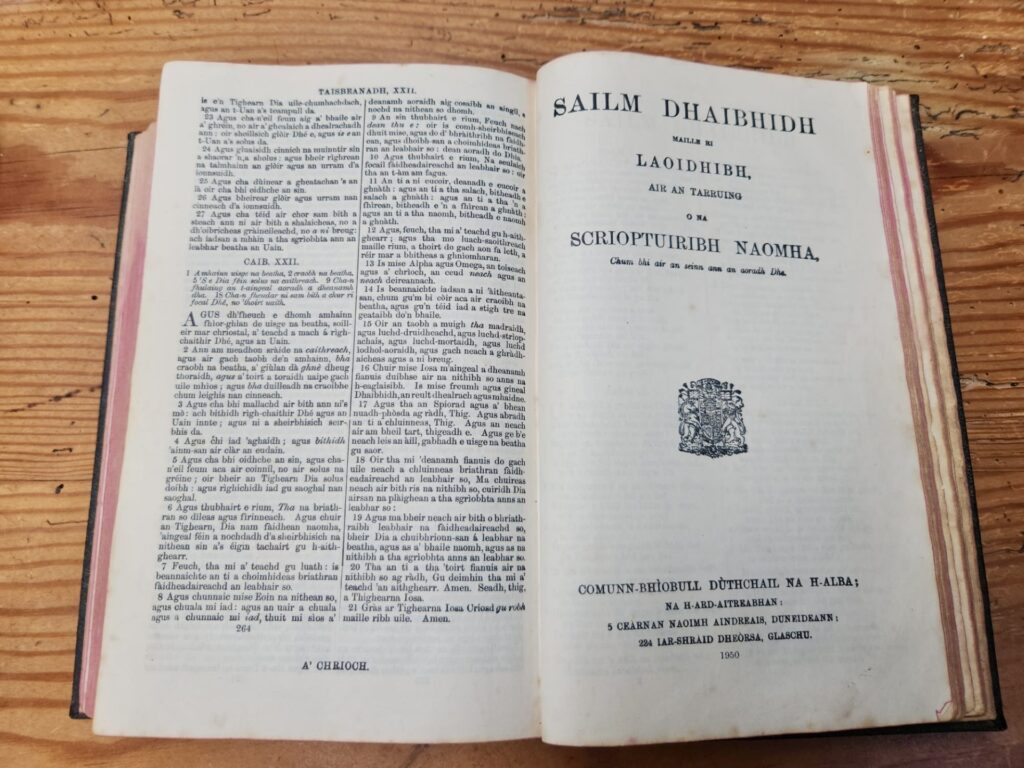
Nonetheless, the post-Jacobite period saw the publication of the first Gaelic translation of the New Testament in 1767. A Gaelic translation of the whole Bible was published in 1801.
In recent years, the Scottish government and other official bodies have introduced policies to preserve and promote Gaelic. Scottish road signs are now bilingual, and Gaelic medium education is available to all children in the Outer Hebrides who wish it and to children in many other locations too.
In 2024, the first minister of Scotland appointed the first Gaelic-speaking Makar (national poet). Pàdraig MacAoidh (Peter Mackay) is from Lewis and writes primarily in Gaelic. In 2025, the Scottish parliament passed the Scottish Languages Bill, which gives Gaelic and Scots official status in Scotland and seeks to help them survive and flourish.